

Curiosity and Honesty
Jon Wu, FSA, MAAA, CERA, shares what has guided him throughout his life and career
May 2026In recognition of Asian American, Native Hawaiian and Pacific Islander (AANHPI) Heritage Month, I connected with Jon Wu, FSA, MAAA, CERA, to gain his insights into an actuarial career guided by curiosity, honesty and a commitment to always helping others.
Here, Jon, who retired in 2024 from his consulting practice that focused on enterprise risk management (ERM), shares some of his career and life experiences.
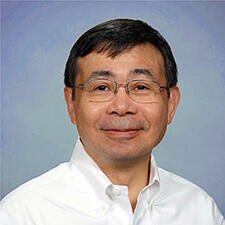
What is an overarching statement you can make about yourself?
Jon Wu: Curiosity, honesty, doing my best, and helping others are the guiding principles I live by each day. They shape the way I approach my work, my relationships, and the contributions I make to the broader actuarial community.
Please introduce yourself to the readers and share your background
Jon: Hello, everyone. I’m Jon Wu, FSA, MAAA, CERA, an immigrant (arriving from Taiwan in 1984 to pursue a business degree) who appreciates the opportunities I’ve had in the United States. I specialize in relationship building, talent management, and actuarial work in life and health, mergers and acquisitions (M&A), and risk management across North America, Latin America, and the Asia Pacific region. My career spans three 10 year blocks: the United States, Canada and Latin America, and Asia Pacific. This geographic diversity has given me a truly global perspective on how insurance markets operate and evolve.
Please share details about your career development and experience
Jon: After earning my MBA (from the University of Rochester in 1986), I let curiosity guide me into the actuarial profession. At that stage, I focused exclusively on delivering excellent work and studying intensively for the exams—a relentless cycle of work, more work, exams and more exams. I was fortunate to receive strong support from the actuarial community—peers, ASAs, FSAs, and even the chief actuaries at National Life of Vermont and Aetna Life & Health. With company backing and dedicated study time, I progressed quickly and earned the ASA designation (in 1987).
Before attaining FSA status (in 1991 and at the same time completing the New York state CPA exams), I broadened my insurance expertise into accounting, modeling and relationship building. I became known as a U.S. GAAP (Generally Accepted Accounting Principles)/APL (Automatic Premium Loan) specialist and excelled at modeling business values. Simultaneously, I improved my soft skills, learning how to present my point of view clearly, negotiate effectively and foster collaborative team environments. By the time my organization, Aetna Life & Health Company, tasked me with leading M&A initiatives on life insurance, I was comfortable coordinating cross functional teams composed of professionals from very different backgrounds to evaluate and acquire businesses throughout North America.
Leveraging my M&A and team-building experience, I helped Aetna Life & Health expand into Latin America and the Asia Pacific. Although I don’t speak every local language, actuaries do share a common “language” of mortality (px and qx) and morbidity. Together, with local partners, we also shared a common goal: optimizing shareholder value. This shared language and respect for each other enabled us to recruit, train and retain talent, align interests and create value.
Can you share some examples of how your Asian education and upbringing helped you in your actuarial career?
Jon: In my experience growing up in Asia, mathematics and science dominated the curriculum. In school, we were taught the slogan, “Save the nation through science.” I’m not deeply involved in hardcore scientific work. But, based on the teachings in school, I was able to master the essential concepts of px and qx to pass the associateship exams. This approach proved effective later during my expatriate assignment.
Many years later, the education concept did not change too much. I had the confirmation during our expatriate assignment. My daughter once believed her mathematical ability was at the 99% level, but after moving to Asia with us, she realized she was more or less at an average level there. Even today, STEM education remains strongly emphasized.
What further advice would you give to young Asian American professionals starting their careers?
Jon: To become a qualified actuary, you must pass a series of examinations to earn your professional license. In addition, strong performance on the job is also essential. Because you’ll be juggling both study and work responsibilities, it’s important to set clear priorities for yourself and be able to explain your career path to family members so they understand what you’re undertaking. You’re not alone on this journey. There are many networking opportunities for actuaries, such as:
- SOA Affiliate Membership
- Local actuarial clubs
- University actuarial clubs
- Exam-prep study groups
- Company-provided resources
Beyond these, you’ll likely want to broaden your expertise across various actuarial specialties—life, health, annuities, investments, risk management and so on—or even acquire complementary credentials (e.g., CFA, CPA, etc.).
Don’t overlook soft‑skill development either. Being able to explain complex concepts in plain language, delivering effective presentations and thinking strategically are all crucial for long‑term success. At each stage of your career, assess your current standing, set realistic goals and adjust your plan accordingly.
What are some of the rewarding aspects of your career?
Jon: The most rewarding aspects of my career have been the cultural immersion and personal growth that come from living and working in different parts of the world. I have called São Paulo, Taipei, and Hong Kong home, and I have traveled to more than 20 countries for both business and leisure. Eventually, I ventured into the EU and got to know more about Solvency II and IFRS, and led the implementation in Asia-Pacific business units for the company. I have studied different solvency regimes, accounting principles and, intriguingly, how to manage general insurance businesses. Being in international operations requires readiness for anything that falls within the company’s risk appetite.
Now that I have more time, I volunteer with local nonprofit organizations, applying my actuarial and finance skills to help organizations be sound in financial and risk management manners. I draw on my boardroom experience and continue acquiring new competencies—especially in climate change and AI—to support the expertise needed for the Society of Actuaries (SOA) and the American Academy of Actuaries (AAA).
Were there any challenges you faced as an Asian actuary, and if so, how have you addressed them?
Jon: The education system I grew up in enabled me to excel in exams and master the technical aspects of actuarial science quickly. As a result, colleagues began to view me as someone capable of designing pricing and valuation models.
Each of us must choose the direction of our career. I decided to move away from the purely technical side and focus on the business side. To make that transition, I consulted my supervisors for advice, and together we created a career‑advancement plan that included:
- Working with a linguistic coach to perfect my English enunciation (thanks to the company’s support program).
- Reading current business news to deepen my understanding of the insurance industry and its SWOT analyses (business acumen).
- Practicing how to articulate business cases—both supporting and opposing arguments (by preparing with supervisors and those who have knowledge).
- Attending business decision meetings to observe and contribute.
FOR MORE
Read The Actuary article, “From Malaysia to New Jersey: A career conversation with Kenny Kan.”
Read The Actuary article, “From rural China to Bermuda: A career conversation with Hong Gao.”
When M&A opportunities arose, I finally had the chance to apply what I had learned to help the company enlarge the scale and demonstrate what I could do. I achieved the goals I set for myself, enjoyed the resulting changes, and subsequently took part in additional M&A projects, advancing my career. From there, I represented my company on my first expatriate assignment. Three key takeaways:
- Initiate conversations with supervisors to seek guidance and open new pathways.
- Leverage company resources whenever possible to drive transformation.
- Actively look for opportunities where you can contribute and add value.
In closing, what can you share about your life and career?
Jon: I have enjoyed a wonderful career as an actuary, making an impact and turning businesses around. The most fulfilling part is seeing the growth of the people I have known and helped. After all, we actuaries have built a large, supportive community, people like you and everyone else. I am grateful that, with the support from the actuarial community, I prepared myself well for my career path, and when the opportunities came knocking, I recognized them and went for it.
Life is good, and I intend to keep it that way.
Statements of fact and opinions expressed herein are those of the individual authors and
are not necessarily those of the Society of Actuaries or the respective authors’ employers.
Copyright © 2026 by the Society of Actuaries, Chicago, Illinois.