

From Markov Chains to AI
The enduring influence of mathematical genius Dr. David Blackwell
February 2026For The Actuary’s focus on Black History Month, I’m pleased to share the story of Dr. David Blackwell, one of the great mathematical geniuses of the 20th century. Dr. Blackwell was a truly brilliant mathematician who made critical advancements in his field while also creating opportunities for others throughout his career and life. He’s an inspiration to me (as an actuary who loves math) and reminded me of why I decided to pursue our profession.
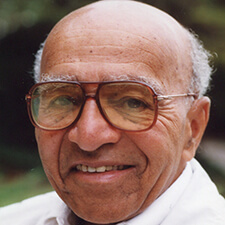
David Harold Blackwell was born in 1919 in Centralia, Illinois, to Grover and Mabel Blackwell, a railroad worker and a homemaker. He was so gifted that he was promoted twice beyond his grade level and graduated from high school in Centralia at the age of 16 in 1935. He then attended the University of Illinois at Urbana-Champaign, where he earned his bachelor’s, master’s, and doctoral degrees in mathematics in just six years, graduating at age 22. As an actuary, I found it interesting that he chose Markov chains for his doctoral thesis.1
Timeline
1941: The now-Dr. Blackwell completes a post-doctoral fellowship at the Institute for Advanced Study (IAS) in Princeton, New Jersey. His goal is to become a mathematics professor, but he faces challenges with racial discrimination when applying for jobs.
1944: Dr. Blackwell begins teaching at Howard University, a private, all-Black college in Washington, D.C. At the time, Howard had a mission to build world-class departments in math and science. Over the course of a decade at Howard, Dr. Blackwell refreshes and expands the university’s mathematics curriculum, introducing statistics coursework. In his research, he begins studying the emerging field of game theory, a branch of applied mathematics. Game theory is the study of situations in which each stakeholder’s outcome depends on the decisions of all stakeholders. This branch of mathematics is used in games such as chess and poker, as well as in business, economics and politics.2
1954: Dr. Blackwell and Meyer Abraham Girshick publish “Theory of Games and Statistical Decisions.” Actuaries may find the book interesting for its theoretical approach to decision-making under uncertainty, its integration of game theory with statistical methods and the frameworks it provides for evaluating risk-based strategies.
1954: Dr. Blackwell relocates across the country with his wife, Ann, and their children to take a visiting professor position at the University of California, Berkeley. Soon after, he is hired as a full professor in the newly established statistics department, becoming its chair in 1957. During his years at UC Berkeley, he conducts extensive research and earns numerous prestigious recognitions for his work.
1965: Dr. Blackwell is elected to the National Academy of Sciences (NAS), breaking a racial barrier as the first Black statistician and mathematician so honored.
1969: Dr. Blackwell publishes “Basic Statistics,” one of the first Bayesian statistics textbooks. This book contained many of the ideas that inspired the popular textbook “Statistics: A Bayesian Perspective,” by Ronald Barry, published in 1995 (which I recall working from in high school!).
1979: Dr. Blackwell receives the John von Neumann Theory Prize. Awarded annually by the Institute for Operations Research and the Management Sciences (INFORMS), the Neumann Prize honors groundbreaking theoretical work that has shaped modern operations research and decision science.
Dr. Blackwell spent the remainder of his career at UC Berkeley, stepping down in 1988 at the mandatory retirement age of 70. Throughout his career, he authored numerous research papers, and mentored and inspired countless students. He remained in Berkeley until his death in 2010, at the age of 91. In 2012, President Barack Obama posthumously awarded him the National Medal of Science. Throughout his career, Dr. David Blackwell authored numerous research papers, and mentored and inspired countless students.
Dr. Blackwell’s legacy in statistics lives on after his death. His work in mathematics and game theory made significant contributions to the fields of data science and artificial intelligence. In 2024, the tech giant NVIDIA launched the Grace Blackwell superchip, which combines NVIDIA’s Grace CPU and Blackwell GPU to deliver enhanced performance levels to power AI models. From my perspective, it is clear that Dr. Blackwell’s work will continue to have a lasting impact for generations to come.
Dr. Blackwell’s contributions to and distinctions in the mathematics field include:
- At the time, in 1941, he was only the seventh Black person to earn a doctorate in mathematics.
- He established a chapter of the prestigious honor society Phi Beta Kappa at Howard University. This was only the second Phi Beta Kappa chapter at a historically Black university.
- He was the first Black person to join the National Academy of Sciences (NAS).
- He was the first Black person to hold a full-tenured professorship at the University of California, Berkeley.
I’m sure most actuaries fondly remember their first statistics course, whether in high school or college. There is a certain fascination found in drawing inferences about real-world events from analyzing numbers, and Dr. Blackwell was driven to great heights by this same fascination. In a 1983 interview published in “Mathematical People: Profiles and Interviews,” Dr. Blackwell comments, “Basically, I’m not interested in doing research, and I never have been. I’m interested in understanding, which is quite a different thing. And often to understand something you have to work it out yourself, because no one else has done it.”
FOR MORE
Read The Actuary article, “Celebrating Black History Month.”
During the research I conducted for this article, I appreciated seeing references to statistical concepts I learned while taking coursework that prepared me for my career. I have always been thankful for the few excellent high school math teachers and college professors who engaged with and inspired me. They had a positive influence on my career before it even started. It sounds to me like Dr. Blackwell was this kind of positive influence on people, especially students, in addition to his vast accomplishments in research. Although not an actuary, he clearly embodied the strong work ethic, intellectual curiosity, and inventiveness I so often see in fellow actuaries. Dr. Blackwell’s mathematical brilliance, groundbreaking accomplishments and lasting legacy are truly inspirational.
Statements of fact and opinions expressed herein are those of the individual authors and are not necessarily those of the Society of Actuaries or the respective authors’ employers.
References:
- 1. Britannica Editors. “David Blackwell.” Encyclopedia Britannica, July 4, 2025. Accessed Nov. 20, 2025. https://www.britannica.com/biography/David-Blackwell ↩
- 2. Sanders, Larry J. 2025. Dr. David Harold Blackwell: The Enduring Legacy of a Howard Luminary in the Age of AI. The Dig, May. ↩
Copyright © 2026 by the Society of Actuaries, Chicago, Illinois.