

Students Reach for the Stars in SOA Research Challenge
University of New South Wales team takes top honors in 2026 Student Research Case Study Challenge
Undaunted by an intergalactic case study, a student team from the University of New South Wales, Australia, exercised their creativity and determination to achieve first place in the Society of Actuaries (SOA) Research Institute’s 2026 Student Research Case Study Challenge. Team VALCS Consulting, made up of Alan Steny, Carol Zhang, Liya Ruan, Sarina Truong and Vihaan Jain, impressed judges with their bold reasoning and actuarial insight.
This year’s challenge drew 100 submissions, the largest number to date, from 65 universities across 19 countries. The case study took teams beyond Earth and into a space-traveling future. Acting as consultants for the fictional Galaxy General Insurance Company, students designed insurance solutions for an intergalactic mining company in a world where interplanetary trade is part of everyday business.
Team VALCS Consulting earned a US$5,000 grant for their university as a result of coming in first. The second- and third-place teams received grants of US$3,000 and US$2,000, respectively, and each student member of the top three teams received US$500.
Teamwork, judgment and a little intergalactic problem-solving
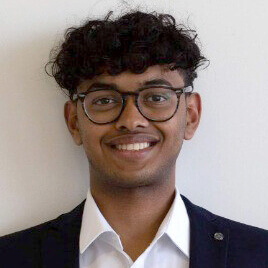
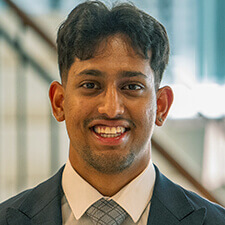
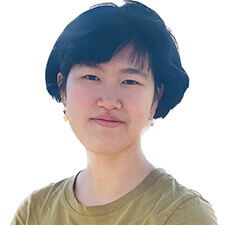


Forming a winning team isn’t always easy, but for the members of VALCS Consulting, it came about naturally.
“Liya reached out to see if I had joined a team,” explained Jain. “Around the same time, I was talking with Sarina about forming a group. She suggested teaming up with Alan and Carol. In the end, it was just a great mix of people.”
According to the team members, their biggest learning experiences were to apply actuarial judgment and make sure they could justify it.
“This challenge really reshaped our thinking,” said Truong. “We focused less on finding the perfect answer and more on choosing an approach that we could confidently defend.”
Ruan added that the Challenge was quite different from their university assignments, which provided clean data sets.
“The Challenge was more similar to a work environment, and the data had quite a bit of uncertainty,” she said. “We had to decide what data to include, how to adjust it, how to interpret it, what assumptions to use, what margins to set. A lot of those decisions don’t have a clear right or wrong answer.”
The team managed the ambiguity by discussing everything openly as a group. Some of the discussions became mini debates, but the team found that sharing ideas with each other
and then challenging different viewpoints helped them arrive at their winning solutions and justifications.
Because all five team members were in their last year at university while working on the Case Study Challenge, balancing all their commitments was another difficulty they had to overcome. They managed their time by dividing the work between smaller teams, and the larger group would meet once a week. They also created a timeline at the very start that mapped out what stage they wanted to reach each week.
“Even with all the scheduling and planning, the most important part was our overall teamwork,” said Zhang. “Despite how busy we were, we constantly messaged each other, and everyone was super responsive. Anytime you had a question or wanted to drop a progress update, you knew that everyone would be replying to your message, so we were all on the same page.
Advice from the winning team
Steny cited three important steps that he felt led to his team’s success:
- Meet regularly and often.“It’s important to meet often and chat about how things are being interpreted and what approaches are best,” he explained.
- Give feedback to fellow teammates early on.“I think one of the things that led to our success was the frequent checkpoints to discuss queries and provide feedback to each other. Getting feedback early in the process gave everyone a chance to gauge their work,” said Steny.
- Commit to doing your best.“We tried to put our best foot forward,” explained Steny, “And we walked away with first place.”
Dr. Xiao Xu, PhD, FSA, FIAA, CERA, CFA, FRM CA, CPA, Senior Lecturer and Accreditation Actuary at University of New South Wales, was the team’s professor and provided resources and direction for her students who participated in the Challenge. Dr. Xu also offers some advice to next year’s participants: “A strong project is never just about fitting models. It is also about choosing sensible assumptions, explaining why you made them, thinking carefully about the business or pricing implications, and communicating your reasoning clearly. Enjoy the modeling, but stay disciplined about structure, interpretation and the bigger purpose of the project.”
A global educational opportunity: Preparing students for the profession
Each year, the SOA Research Institute presents university teams from across the globe a case study that mirrors the kind of work actuaries actually face: a complicated business issue, a large and imperfect dataset that requires real cleanup and judgment, and a deadline that arrives faster than anyone would prefer. The teams’ task is not only to complete the analysis, but also to communicate their findings clearly and convincingly, as if presenting recommendations to business leaders.
“Success in the Challenge goes beyond creating a spreadsheet,” said Lisa Schilling, FSA, Director of Practice Research, SOA Research Institute. “Participants need to explain their thinking, describe the decisions they made and why, share their recommendations, discuss any potential risks, and outline what they would do next if they were advising decision-makers in a real-world situation.”
Dr. Xu commented that she would encourage actuarial students to participate in the Challenge despite its significant workload. She noted that the project is highly engaging, with creative and interesting case studies that make the experience enjoyable.
“More importantly, it is conducted as a global challenge, which gives students the opportunity to compete with actuarial students around the world,” she added. “Given the international mobility and mutual recognition within our actuarial profession, this is always a great plus.”
A commitment to close collaboration
WE’RE ON THE ‘CASE’
Check out the 2026 Student Case Study Challenge first-place report and other finalist entries and see a complete list of the semifinalist teams.
Listen to an interview with the VALCS Consulting team in a recent Research Insights Podcast.
The Student Research Case Study Challenge reflects an SOA Research Institute commitment to work closely with universities and help prepare the next generation of actuaries through hands-on research and practical business problem-solving. Since launching in 2015, the Student Research Case Study Challenge has given students a chance to apply technical skills in situations that feel far closer to the real world than a typical classroom assignment.
Statements of fact and opinions expressed herein are those of the individual authors and
are not necessarily those of the Society of Actuaries or the respective authors’ employers.
Copyright © 2026 by the Society of Actuaries, Chicago, Illinois.