

Connections That Count
Two perspectives on mentorship and growth
October 2026Image Credit: Shutterstock
Actuaries are trained to analyze uncertainty for others. Yet, in our experience, we at times fall short when making decisions under uncertainty in our own careers. The actuarial path is viewed primarily through an academic lens, with professional development measured by examinations, technical mastery and continuing education. Yet, these represent only part of the journey. Growing as an actuary also requires sound judgment, confidence, a strong professional identity, effective communication and the ability to navigate ambiguity.
In life and in our careers, clarity does not always arrive on schedule. Inspiration may come unexpectedly. Sometimes, one conversation, one question, or a new perspective reveals a path forward. The Society of Actuaries (SOA) MentorLink program provides an opportunity to build relationships within the actuarial profession. It’s a welcoming avenue for participants to connect. There’s no need to have a perfectly formulated question or to feel nervous about asking for career advice.

To bring the work of MentorLink to light, we interviewed Mark Brann, FSA, who recently volunteered to mentor aspiring actuaries and was connected with Miles Finch, an SOA Affiliate member. We asked both to reflect on how their mentoring relationship began, what they discussed, what surprised them, and what each took away from the experience.
Their responses are presented in their own words, as submitted, so that readers can hear the experience directly from both participants. After the Q&A, we detail key insights from the discussion.
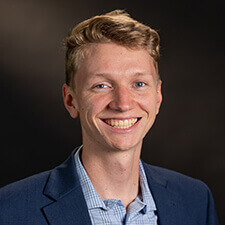
What first drew you to become a MentorLink mentor?
Mark: Over my career, I’ve had the opportunity to be a mentor and mentee several times and have found mentoring to be a valuable and rewarding way to connect with others. I hoped to share advice and perspectives as well as encourage the next generation of the profession.
What led you to seek a mentor through MentorLink, and what were you hoping to gain?
Miles: I was looking for the opportunity to have meaningful, in-depth conversations and bounce ideas off an established professional who could point me in the right direction for my own development. Before this, my interactions within the field were mostly brief, and I wanted a mentor to help navigate how AI and emerging tech are changing the career landscape. I initially was worried if a mentor would have time to meet and if they would be “chill.”
When you first connected with your mentee, what did you sense they were looking for?
Mark: My mentee was in the middle of pursuing his degree and had all the big questions actuarial students have at that stage. Miles was curious about exams, types of actuarial careers, and the future of the profession. It was fun to reconnect with my own thoughts and emotions during that period of my life.
What was the most important question, challenge or decision you brought into the mentoring relationship?
Miles: The main challenge I faced was determining the most effective path toward professional readiness. When I reached out, I had an internship offer, but I hadn’t started, and my understanding was limited to academic perspectives. Mark provided tangible foundations for my growth, and the notes I took during our meetings became a great starting place to dive deeper.
Can you describe one conversation or moment that stayed with you?
Mark: We established that the mentee needs to set the agenda and bring questions. In our first meeting, Miles was focused on how to get the most out of his upcoming internship. One great topic was what professional habits help distinguish actuaries early in their careers. I was really impressed by the preparation and professionalism he brought to the internship. It was a strong way to start our mentor relationship and helped us quickly establish an open dialogue.
Can you describe one conversation, insight or piece of encouragement from your mentor that stayed with you?
Miles: One conversation about generative AI has stayed with me: Mark explained that while AI will significantly change the profession, those who learn to use it well will have an advantage rather than something to fear. Simply, it will put you in a better position to adapt and create value. He emphasized the importance of mastering the fundamentals while actively learning new tools, and that perspective has shaped how I approach my own development.
How did you approach the role of mentor, especially the balance between offering advice and helping the mentee find their own answer?
Mark: The first goal of a mentorship is to build a genuine connection. Whether in mentoring or leading, my approach overall is to be as authentic as possible. The hope is that it will be reciprocated and lead to transparent discussions. When the mentee feels comfortable enough to be authentic themselves, it leads to productive learning experiences for both parties.
What made the mentoring relationship feel useful and authentic?
Miles: Mark was genuine and easy to talk to, which made our conversations feel natural rather than formal. Since we didn’t know each other beforehand, I felt comfortable asking honest questions and even challenging his perspective. It was also valuable to hear from someone working in a different area of the profession than my internship.
What did you gain from the experience that you may not have expected?
Mark: I really enjoyed hearing what the university level actuarial student of today thinks and cares about. Some things change and some things stay the same. Since I began my career, the growth in data science and artificial intelligence has had a material impact on the pathways and impacts an actuary can have in their career. Hearing how a 20-year-old views these changes as they embark on their actuarial journey was both insightful and enjoyable.
What changed for you because of the MentorLink experience?
Miles: The experience gave me a much clearer sense of where I should invest my time and who I should learn from. It also made the actuarial profession feel more approachable, reminding me that every actuary was once in my position. I think it’s made me more open to seeking guidance and stepping outside my comfort zone.
Why do you think mentoring matters to the actuarial profession? What would you say to someone considering becoming a MentorLink mentor?
Mark: The actuarial profession has been around for many multiples of any actuary’s career. That means nurturing and guiding future generations is critical to keep the profession advancing and thriving. The SOA MentorLink program is a terrific resource for facilitating mentorships between actuaries who might otherwise never meet. I wish the program had existed when I was at university to get transparent guidance on the big questions about my career from individuals beyond my normal sphere at my internship and university.
What would you say to someone who is unsure about participating as a mentee?
Miles: Come in with an open mind and a few thoughtful questions. You don’t need to have everything figured out; even short conversations can provide valuable direction. MentorLink gave me practical guidance, greater confidence, and a clearer vision for my career. The opportunity to pick Mark’s brain was super helpful.
Author Insights from Mark and Miles’s Mentorship Journey
- MentorLink brings different perspectives together.
- Human curiosity, reflection, and a willingness to engage can make connections and conversations more valuable.
- Building trust is a stepping stone for many a shared journey. Mark’s openness and authenticity helped Miles feel comfortable asking candid questions and, over time, challenging his mentor’s views.
- Building a sense of shared responsibility. Mark gave Miles the freedom to shape their conversations. Miles’ preparation for their first meeting helped establish a productive dialogue.
- Their discussions about AI were a highlight. Mark encouraged Miles to develop strong actuarial and analytical fundamentals while also learning to use new tools.
- Mark also gained insight into how the younger generation views technology. While Miles brought curiosity and perspective shaped by emerging technologies, Mark brought experience, context and professional judgment.
- A mentor does not have to match a mentee’s exact job or follow the same career path as the mentee. Mark’s distance from Miles’s immediate internship allowed him to help Miles see the bigger picture, examine broader professional habits, long-term development and emerging opportunities, rather than focusing on one role.
Mentoring and More
Get details on taking part in the SOA’s MentorLink program
SOA Affiliate Membership is free and open to anyone with an interest in the actuarial profession and not already a member of the SOA.
Read The Actuary article, “Mentorship, Risk and Reinvention.”
A look at two approaches
Long-term mentoring: Mark and Miles’s journey is a great example of the long-term one-on-one mentoring that provided the opportunity for a relationship to develop over several months, allowing trust to build and create space for deeper guidance, reflection and growth. But not every question requires a long-term mentoring relationship, and not every participant is ready to make the same commitment as Mark.
Flash mentoring: This is geared toward a more focused conversation around a specific question or early-career concern. It may be well-suited for situations where someone needs advice or a sounding board in a pinch.
Together, these options reflect the realities of professional life; sometimes people need sustained support, and sometimes they simply need the right conversation at the right moment.
In closing
Mentorship can create a space where experience meets curiosity, where giving back also becomes an opportunity to grow, and where actuarial career questions can be asked in a supportive environment. Mark’s and Miles’s experience here reinforces the idea that, in a field devoted to understanding uncertainty, mentorship offers the reassurance that uncertainty does not have to be faced alone.
Statements of fact and opinions expressed herein are those of the individual authors and are not necessarily those of the Society of Actuaries or the respective authors’ employers.
Copyright © 2026 by the Society of Actuaries, Chicago, Illinois.