

The Pension Landscape in Asia
A conversation with Billy Wong, FSA, CFA, on trends within the evolving pension market
February 2026Photo credit: Shutterstock
In Asia, as reports show, rapid economic growth and an aging population are driving the need for effective retirement income solutions. Ensuring that pension systems can provide a sufficient and stable income across economic cycles is crucial to the well-being of retirees, who now account for an increasing share of the population.
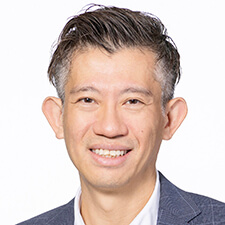
Against this backdrop, The Actuary Asia spoke with Billy Wong, FSA, CFA, a seasoned actuary with more than 20 years of experience in Hong Kong’s pension industry, to gain his thoughts and opinions on the evolving pension landscape and emerging trends across the region.
Could you please tell us about your background and your current role?
Billy Wong: I am currently leading the pension business of a defined contribution provider in Hong Kong, having started my career as a pension actuary at a consulting company. I am leading the profitable growth of the pension business by managing sales, client services, product development and marketing functions.
I am very active in the actuarial community, having served as president of the Actuarial Society of Hong Kong in 2024 and as chairman of the Asian Actuarial Conference in 2018.
What is the current state of the pension and pension risk transfer market in Asia?
Billy: Defined contribution and lump sum benefits are much more common in Asia, and it is not common for the employers or the government to take the longevity risks. Compared to the U.S. and Europe, pension benefits are less generous in Asia. Having said that, since the pension system is relatively young and the populations in most countries in Asia are still growing, we would observe reasonable growth of pension assets in Asia.
The pension risk transfer market (as reports show) is relatively small in Asia, as defined benefit plans and annuity plans are less common.
What are the most common pension risk transfer and de-risking strategies used in Asia?
Billy: Larger pension plans with lump sum benefits usually appoint consultants to carry out asset liability modeling to determine the adequate long-term asset allocation (e.g., equity and bond mix), which helps to manage the risks of the plan. There are limited cases of pension risk transfer to insurance companies.
In the Hong Kong market, what roles are government and insurance companies playing to close the protection gap in people’s retirement income needs?
Billy: With very low birth rates over the last few decades, an aging population is a key emerging issue for the Hong Kong population. A substantial portion of the generation that is soon to retire will not have any children or will have only one child. Hence, I expect the demand for life annuity products to gradually increase, since these generations have less consideration for leaving an estate.
The Hong Kong government is keeping relatively basic social benefits for the elderly but is setting up a government agency company (owned by the government but not guaranteed by the government), which provides life annuity products to Hong Kong retirees at very competitive premiums. There are also individual tax advantages to buying qualified annuity products offered by insurance companies, although these annuity products can still pay a lump sum at a specific age.
(Note: Commentary on government policy reflects the interviewee’s personal perspectives.)
In the Hong Kong market, how have individuals been funding their retirement income needs? Have you observed any changes in that behavior recently?
Billy: The working population has to make contributions to the Mandatory Provident Fund (MPF) of five percent of their salary, with another five percent matched by the employer. This serves as the basic savings for retirement. Hong Kong individuals used to invest their savings in properties for long-term purposes. However, since property prices have been dropping slightly and government policy tends to make property investment less attractive compared to the past, I’ve observed that individuals are shifting their money toward more insurance and fund products that target retirement needs.
Do life insurers in the Asian market have a significant interest or appetite for developing retirement products?
Billy: Asia’s markets are still developing, and most retirement products are effectively lump sums rather than annuities; in fact, there are annuity options available on top of lump sums, but I believe most customers are not taking those options yet. Customers remain skeptical about annuity products, but I believe the trend of annuities will evolve slowly in this region. Some life insurers are exploring the annuity market, but it may still be some time before any major trend happens.
Have you noticed any innovative insurance solutions for providing retirement income in the Asia market recently?
Billy: I’ve observed that some Chinese insurers have linked insurance products to the rental rights of elderly estates. There are demands for the elderly in Hong Kong to look for better living environments with lower costs, and hence, the elderly estates inside the Greater Bay Area (which is one to two hours away from Hong Kong) are quite attractive. Linking the insurance product to the renting right makes the selling story more complete.
What long-term trend do you expect to observe in the pension risk transfer market across Asia and worldwide?
Billy: With an aging population of a wealthy economy, I expect the pension risk transfer market will grow slowly over the long term, although the systemic risks of mortality improvement may not be easily and adequately priced.
Does working as a pension actuary require any unique skills or mindset?
Billy: Personally, I think a pension actuary also needs to understand the social issues, especially the dynamics between government benefits and the legislation for employers and employees to save for their own retirement. A pension actuary needs to understand the art behind the conflict among multiple stakeholders. Understanding the legal system will definitely help a pension actuary to succeed.
What general advice would you offer to actuaries interested in working in pension or pension risk transfer?
Billy: I like the concept of a pension that helps with better retirement financial planning for an individual and helps resolve many fundamental social issues. Having said that, working in the pension industry requires much more than actuarial skills, such as understanding the employer-employee relationship and even the politics of the government, which provides longevity protection of the older generation supported by the taxpayers of the younger generation.
FOR MORE
Read The Actuary article, “AI and the Pension Industry.”
Read The Actuary article “Pension Risk Transfer.”
A detailed pension risk transfer report, “Pension Risk Transfer: Evaluating Impact and Barriers for De-Risking Strategies,” is available from the Society of Actuaries (SOA).
What advice would you offer to a fellow actuary for building and managing a retirement investment portfolio for themselves?
Billy: Setting a personal target (e.g., a long-term return objective or a savings goal over a defined period) is important, rather than simply seeking higher returns. Individuals would need to define what they want, which will help them make decisions more easily. A person who is seeking more aggressive outcomes would typically have to expend greater effort to understand and actively manage that approach. A person who prefers an easier approach should be realistic about their expectations. Do not let emotions drive investment decisions.
Statements of fact and opinions expressed herein are those of the individual authors and are not necessarily those of the Society of Actuaries or the respective authors’ employers.
Copyright © 2026 by the Society of Actuaries, Chicago, Illinois.